Pruna Turned MiniMax's Video Model Into a Fast Image Generator. The License Is the Catch.
P-H3-Image offers eight-step generation, multi-reference editing and smaller quantized files, but commercial deployment requires reading the MiniMax license.
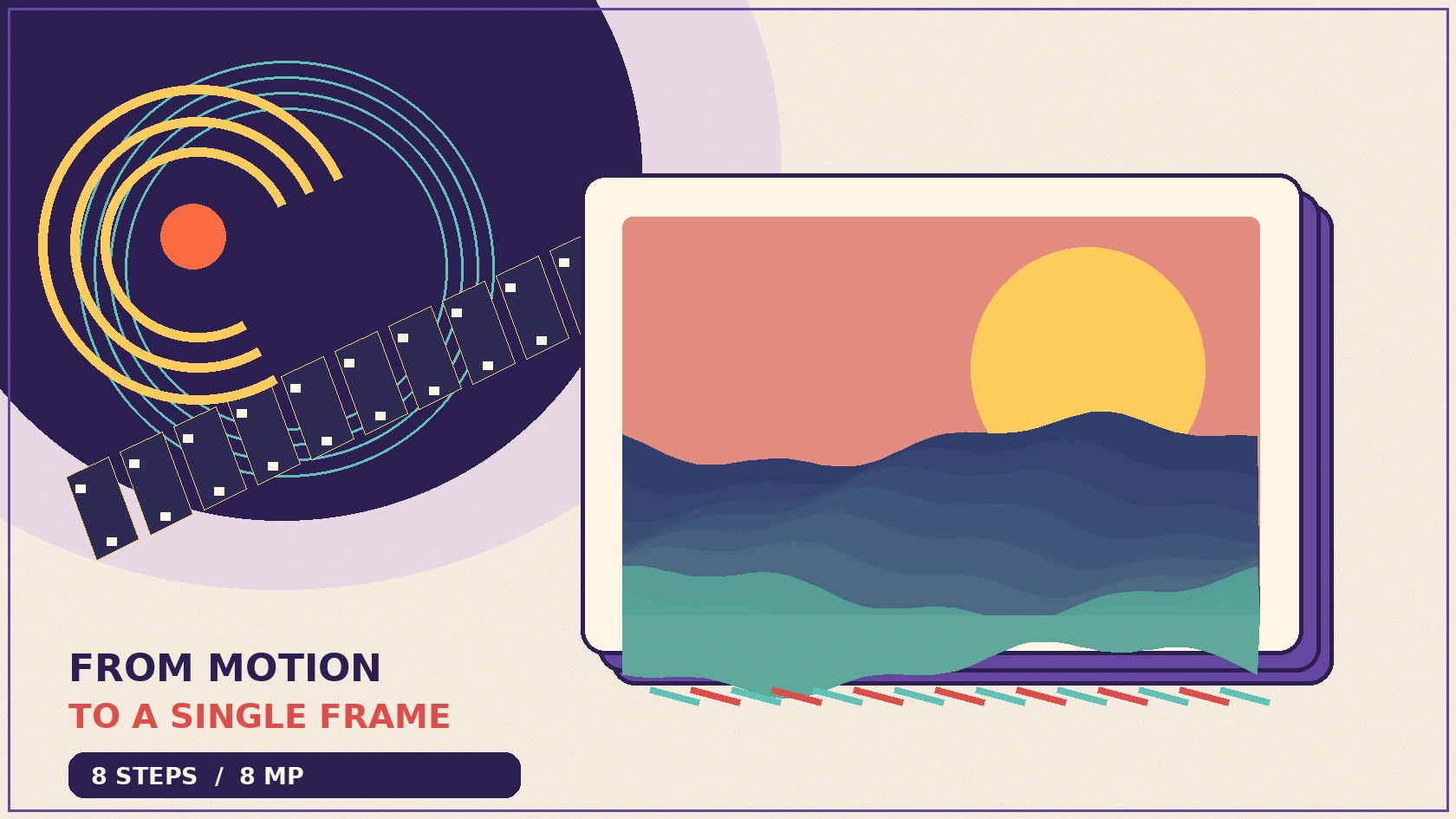
Pruna AI has released P-H3-Image, an open-weights image generator built by stripping down and reworking MiniMax’s H3 video architecture. Announced on 3 November 2026, it aims to produce detailed still images in just eight diffusion steps and supports editing guided by multiple reference images. The headline promise is faster, high-resolution generation on locally controlled hardware; the less obvious story lies in licensing, memory requirements and what the published results do not yet prove.
In its launch announcement, Pruna says the smallest quantized package is about 20 GB, down from 143 GB for the original H3 stack, and claims 2.6 seconds versus 12.4 seconds for a 4-megapixel test on one NVIDIA B200. These are vendor comparisons for specified configurations, not independent cross-model rankings.
Why adapt a video model to make single images?
Video generation models must learn details that persist from frame to frame, including material texture, lighting and object shape seen from different angles. Those learned representations can be useful for still-image synthesis and editing. But video-oriented components can also be unnecessarily heavy for creating a single frame. Pruna reworked the text processing, transformer backbone, diffusion schedule and decoder to specialize the H3 foundation for images.
The launch post describes a smaller text encoder, an eight-step sampling schedule produced through distillation, and a decoder adapted for sharper single frames. The smallest quantized files can fit on hardware with about 21 GB of VRAM under the documented ComfyUI workflow. That is meaningfully different from running the full precision model: the main Hugging Face card describes far larger memory needs for its unquantized 8-megapixel pipeline.
How to read the megapixel and reference-image claims
Pruna advertises generation from roughly 2 to 16 megapixels. Its public model documentation recommends 8 megapixels as a reliable operating point, with lower resolutions more likely to show errors in faces, hands and fine details. The model card documents edits with up to eight input pictures; the launch summary mentions nine. Developers should treat the actual published pipeline and model card as the implementation-specific guidance rather than promising a nine-reference feature without testing.
The published Hugging Face model card lists eight sampling steps, 8 MP preferred output, up to eight input images for editing, roughly 101 GB full-precision peak memory with prompt upsampling on, and potential text and anatomical artifacts.
| Specification | Published description | Important caveat |
|---|---|---|
| Sampling | 8 diffusion steps | Not a benchmark of all image models |
| Resolution | 2–16 MP announced; 8 MP recommended | Low-resolution detail can degrade |
| Reference editing | Up to 8 inputs in model card | Launch post mentions up to 9 |
| Memory | ~21 GB quantized; ~101 GB full pipeline | Precision, workflow and GPU differ |
| Speed | Vendor cites ~2.6 s at 4 MP | Specific B200 and configuration |
Open weights do not mean unrestricted commercial use
P-H3-Image is distributed under the MiniMax H3 Community License, not an unrestricted Apache-style license. The published documentation identifies territorial exclusions covering the European Union, United Kingdom, South Korea and United States unless a separate license is secured, and includes a required 'Powered by MiniMax H3' notice for products built on the work. Developers must check the actual license and applicability before deployment or customer distribution.
Pruna’s ComfyUI repository provides lower-precision weight files and workflows. The MiniMax license specifies the relevant territory and use conditions.
What has not been independently demonstrated
The release includes qualitative samples and developer-side speed figures, but the information reviewed here does not establish a controlled independent comparison across prompt sets, seeds, hardware and alternatives. A model that looks excellent on curated portraits may still struggle with typography, compositing fidelity or complex hands. And a 20 GB download is not evidence that every consumer GPU can run it without offloading, compromises or setup work.
For teams building image tools, this is still an interesting release: a video-native representation is being adapted into an image model with an explicit local inference path, support for multiple references and aggressive quantization. The right next step is to evaluate a representative set of owned prompts and edits, inspect output quality and speed on the actual GPU, and review the license before integrating it into a commercial product.
Publication history
— First published.
No published corrections or earlier versions.
How this was made
UpThat uses AI-assisted research and writing. Source checking and publication follow our editorial review workflow. See the original documents above to assess the reporting.
How we use AI ↗