How much carbon stays stored? A new study puts a number on the shortfall
A November 6 study compares the risk of losing carbon stored in forests and underground. Its simulations show why shared hazards matter as much as the choice of storage.
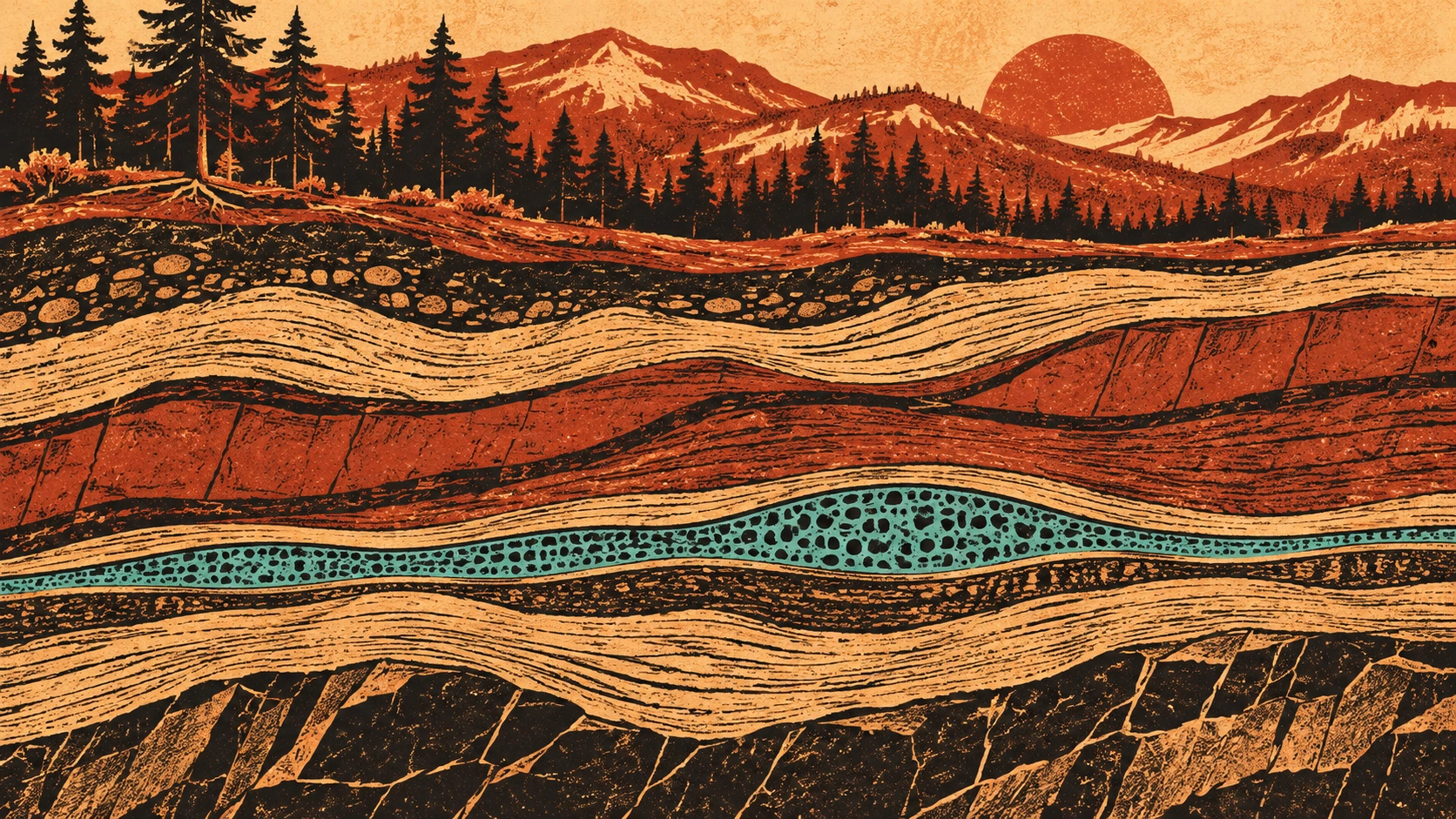 Editorial visualization
A carbon removal credit can start with a tonne of CO₂ taken out of the air. A harder question is how much of that tonne will still be stored centuries later. In a study published November 6 in Nature Climate Change, Bali Lee and colleagues propose a measure called Carbon at Risk. Under their simulations, the 200-year shortfall threshold exceeded 70% for one modeled California forest project. It was about 0.15% for a well-regulated offshore geological storage scenario.
Both figures describe the downside of a modeled range of outcomes. The researchers borrowed the idea from Value at Risk in finance and expressed the result in tonnes of carbon dioxide instead of money. They asked how far storage could fall short of what was contracted, given a time horizon and a chosen level of confidence.
What the percentages measure
At 95% confidence, the threshold is set so that about 5% of modeled outcomes have a larger shortfall. For a hypothetical project starting with 1,000 tonnes, a 17% threshold would mean roughly one in 20 model outcomes falls more than 170 tonnes short. The figure says where the worst 5% begin. It leaves open how large losses could get beyond that point.
| Modeled storage scenario | Shortfall threshold |
|---|---|
| Single California forest project | >70% |
| Well-regulated offshore geological storage | ≈0.15% |
| Poorly regulated onshore geological storage | ≈17% |
The forest model draws on historical burned-area data and assumptions about how quickly vegetation regrows. For underground storage, the authors used the Storage Security Calculator developed by Alcalde and colleagues, which simulates trapping in rock and potential leakage through routes such as wells and faults. The high-loss onshore example assumes weak oversight and poorly documented or unplugged legacy wells. It is an extreme scenario.
The two geological results vary in several respects at once. They illustrate why well integrity and site history matter when assessing a project. A buyer cannot transfer the offshore figure to a different site simply because the CO₂ will also go underground.

Publication history
— First published.
No published corrections or earlier versions.
How this was made
UpThat uses AI-assisted research and writing. Source checking and publication follow our editorial review workflow. See the original documents above to assess the reporting.
How we use AI ↗