The AI Receptionist Is Becoming a Feature. Sell the Workflow Around It Instead
Voice AI is getting cheap and increasingly built into business software. The durable opportunity is configuring the knowledge, routing, integrations, escalation and QA that make it useful.
 Editorial visualization
The opportunity is not the bot
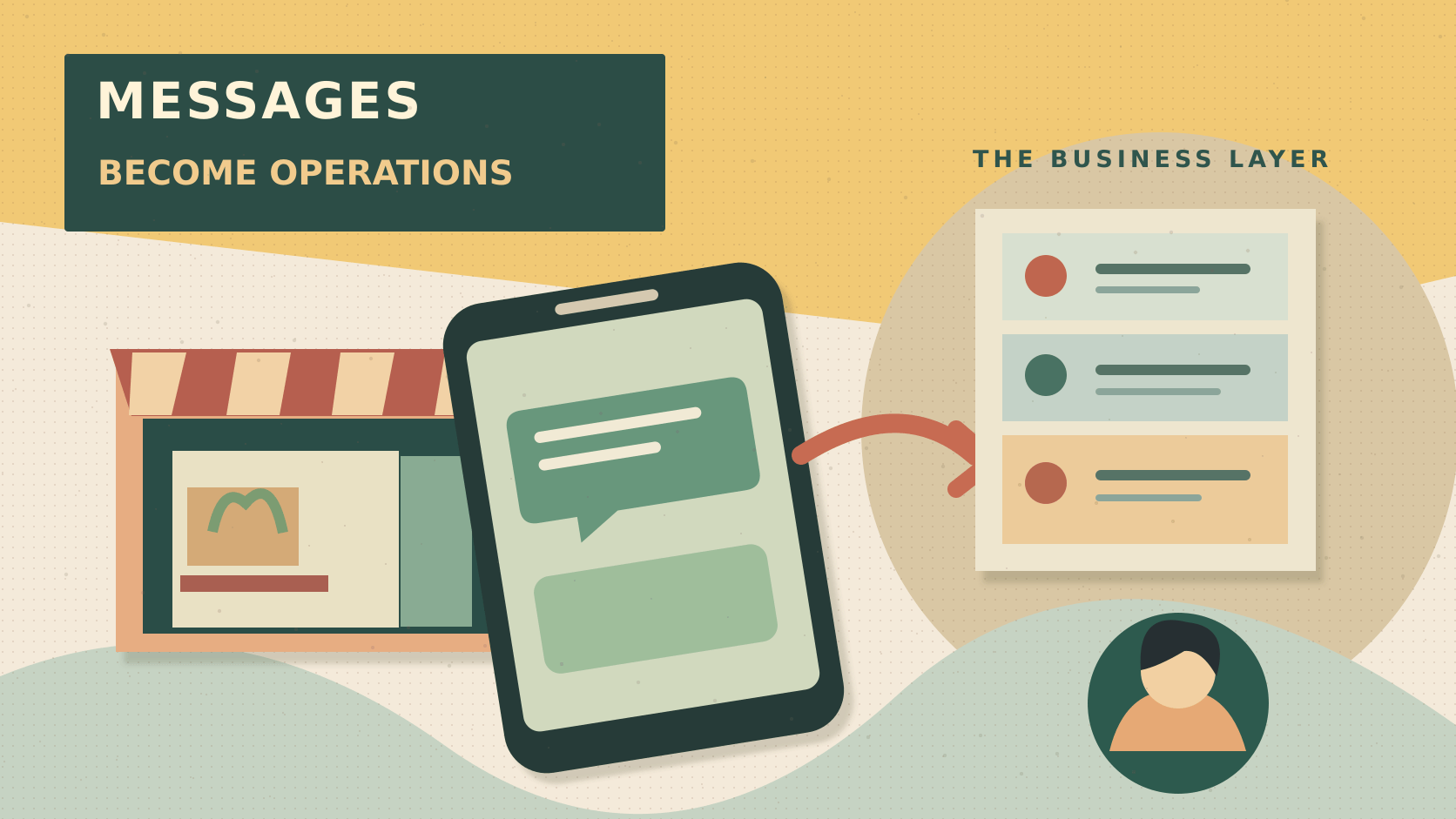
Voice AI is becoming a component of existing business software. Square already offers AI-powered phone ordering for eligible merchants, while OpenAI publishes usage-based realtime voice pricing. The opportunity is not merely installing a bot: it is designing reliable call routing, accurate business knowledge, safe handoffs and measurable outcomes.
FACT: voice automation is already being productized
As of November 4, 2026, OpenAI's published API pricing lists gpt-realtime-2.1 audio at $32 per million input tokens and $64 per million output tokens, and gpt-realtime-2.1-mini at $10 and $20 respectively. These token prices are not an all-in cost per phone call: telephony, text tokens, integrations, hosting and QA can add expense. AI callers should be clearly told they are interacting with an automated assistant, and recording or processing calls must follow applicable privacy and consent laws.
Square's official support guide confirms AI-powered voice ordering for eligible Square Plus, Premium or Messages Plus subscribers. It can take pickup orders, send paid orders to POS and kitchen systems, alert staff and provide call summaries. It requires a Square-provided business number, may take around five business days to onboard, and currently requires online payment before an order is processed. This is a bounded ordering capability, not a general-purpose receptionist that can safely promise arbitrary bookings or policies.
What to sell instead
Package the service around one measurable workflow: after-hours lead capture for home services, appointment intake for a salon, or routine ordering and FAQ handling for a restaurant. Audit real calls, identify repetitive intents, build a canonical knowledge sheet, then design three paths: resolve, take a controlled action, or escalate. Complaints, unusual requests, uncertain answers and sensitive account issues should reach a human with context attached.
ESTIMATE: economics of a small pilot
A narrow implementation can reasonably take three days to three weeks depending on telephony, calendar, CRM and business-data quality. Incremental AI and automation costs can plausibly stay in the tens to low hundreds of dollars per month, although telephony, provider markup and integration software can dominate the bill. A freelancer or small agency could test a $500–$2,000 fixed-scope pilot. This is a planning estimate, not an observed market average or income promise.
Implementation workflow
Baseline inbound calls, missed calls, common intents, bookings and staff time. Create approved knowledge and a prohibited-answer list. Configure one narrow flow and connect only the minimum tools required. Build explicit human handoff rules. Test historical and adversarial calls including accents, noise, ambiguity and unavailable slots. Disclose AI interaction when it is not obvious. Launch narrowly, review transcripts and failures weekly, and expand only after measured improvement.