AI Bookkeeping Is Becoming a Feature. The Service Opportunity Is Financial Workflow QA
QuickBooks and Xero can increasingly categorize, reconcile, capture bills and chase payments with AI. That makes basic automation cheaper—and makes implementation, exception handling and human review more valuable.
 Editorial visualization
Small-business accounting software crossed an important threshold in 2026: the software itself can now do a growing share of the bookkeeping automation that consultants used to sell as a custom AI project. Intuit says QuickBooks' Accounting AI can gather context, suggest categorization and matching, detect anomalies and update transactions with permission. Xero says its JAX platform can automate bill capture and reconciliation and is adding bill-protection checks for unusual amounts, changed bank details and unfamiliar suppliers.
That does not eliminate a service business. It changes what is worth selling. The stronger offer is financial-workflow QA: configure the native automation, clean the source data, define approval and exception rules, test it against historical transactions, and keep a human accountable for anything that can move money or distort the books.
FACT: the automation layer is already inside the accounting product
QuickBooks' August 2026 support documentation describes Accounting AI as a built-in system that handles routine context gathering, categorization, matching and anomaly detection while keeping the user in control. Intuit also expanded QuickBooks integrations with ChatGPT and Claude in July, including actions such as creating invoices from conversational interfaces.
Xero moved in the same direction. In July 2026 it announced JAX features for payment follow-ups, bill protection and cash-flow actions. Its current AI accounting materials say bills and receipts can be captured automatically, reconciliations and categorization can run in the background, and automated actions are logged for review.
The implication is uncomfortable for automation freelancers: charging a client thousands of dollars merely to bolt an LLM onto bookkeeping is becoming harder to justify. The accounting platforms already own the ledger, permissions, transaction history and increasingly the AI.
What to sell instead
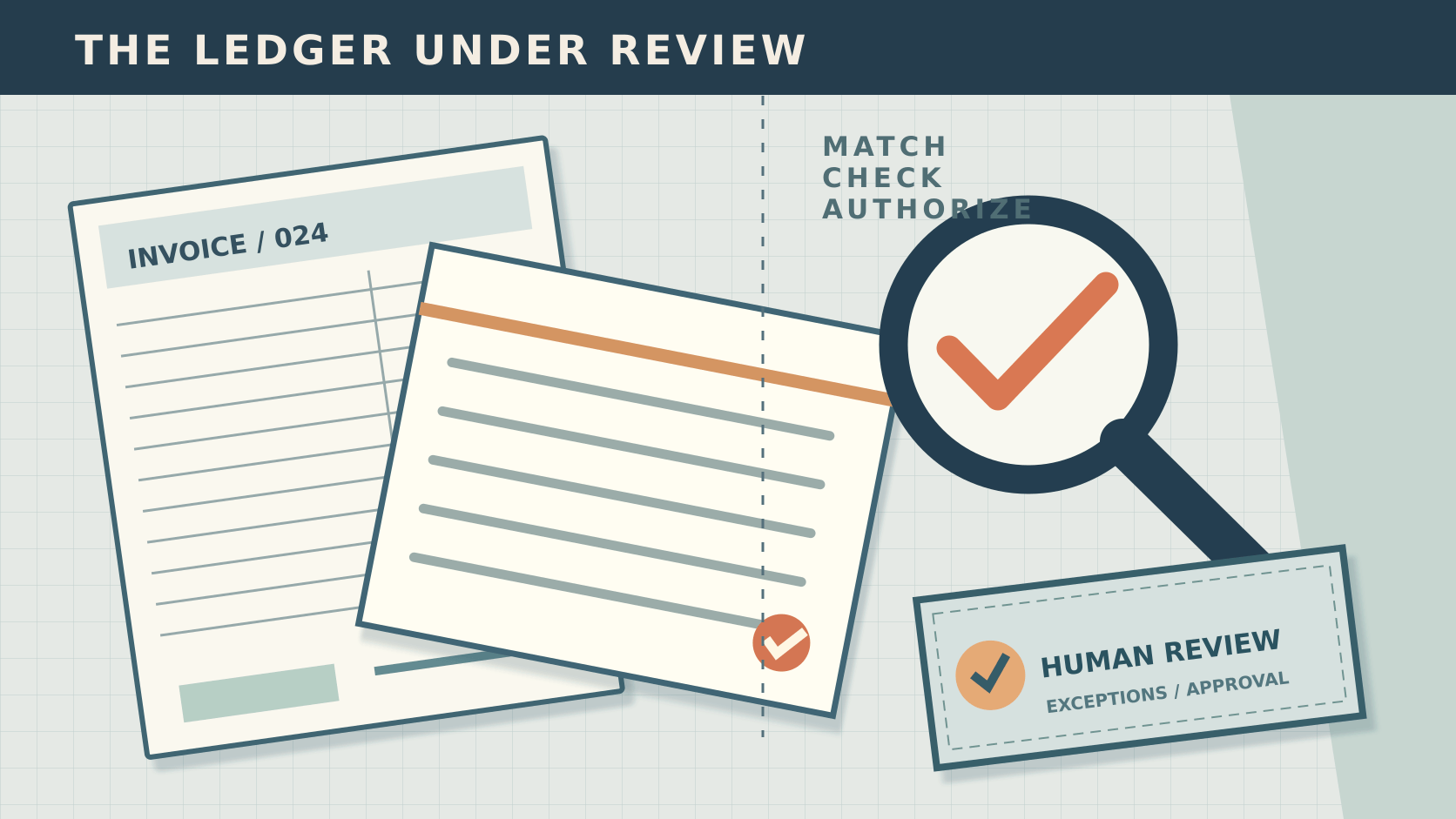
Start with one narrow workflow where errors are expensive but repetitive work is obvious. Accounts payable is a good example: invoices arrive, data is captured, the bill is matched against known vendors or purchase records, exceptions are flagged, an authorized person approves, and only then does payment proceed.
A useful implementation service can audit the last 100–300 transactions, normalize vendor names and categories, identify recurring exceptions, configure native capture and reconciliation features, establish approval thresholds, document who can change bank details, and create an exception queue for anything uncertain. The deliverable is not an autonomous accountant. It is a controlled system that reduces clerical work without removing financial accountability.
ESTIMATE: a realistic pilot
For a small company already using QuickBooks or Xero, a tightly scoped pilot can plausibly take one to three weeks. Incremental software cost may be close to zero when the required automation is already included in the client's accounting plan; otherwise the accounting subscription and add-ons dominate the bill. For reference, Xero's US list prices are currently $27 a month for Early, $59 for Growing and $97 for Established after promotional pricing, with feature limits varying by plan.