Canva AI 2.0 Can Make the Assets. The Service Opportunity Is Building the Brand System Around Them
Canva’s new agentic design stack can generate editable, on-brand campaigns and automate recurring creative work. That makes raw asset production cheaper—and creates a more defensible service around brand cleanup, migration, governance and QA.
 Editorial visualization
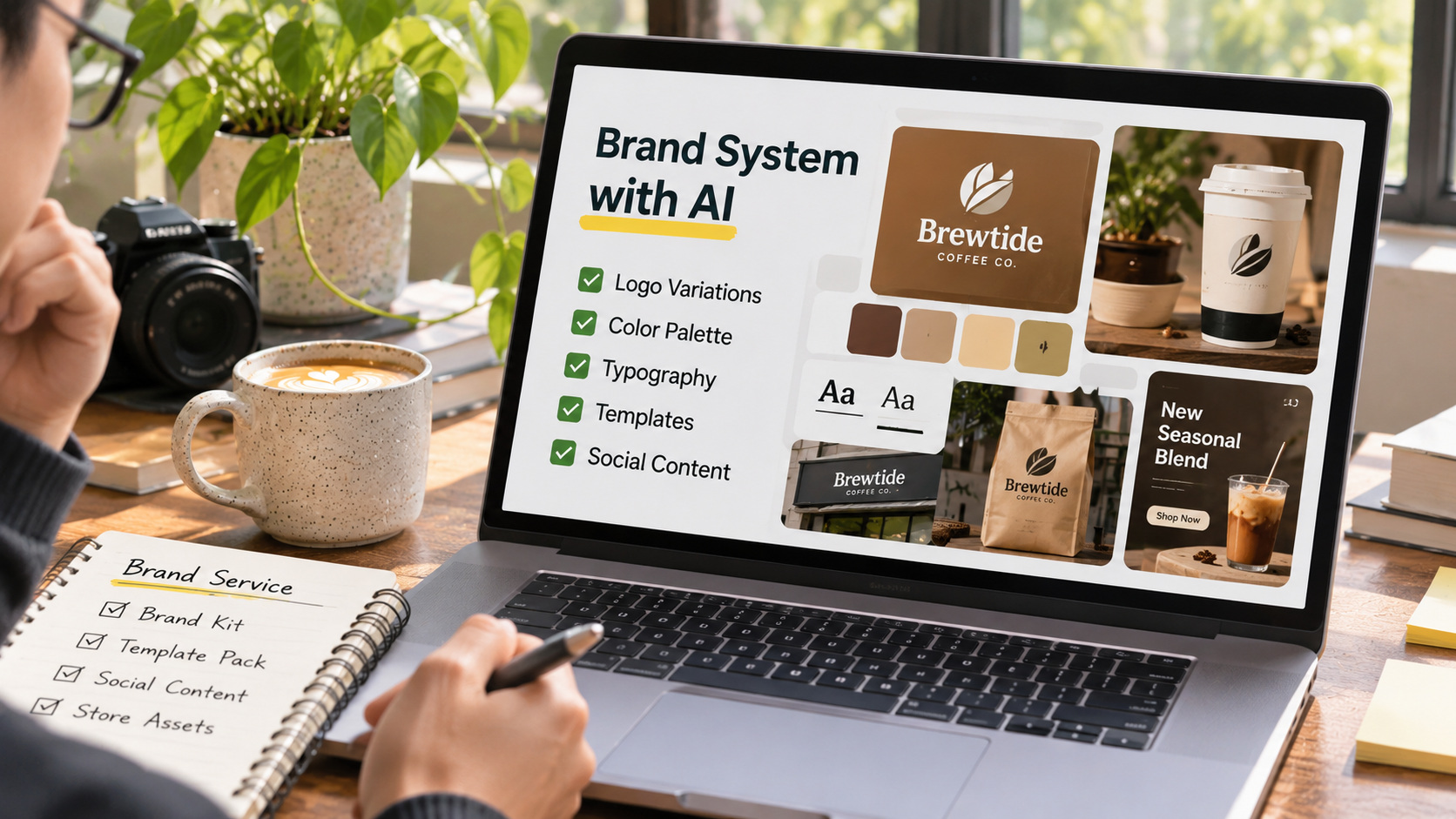
Canva’s 2026 product direction changes the economics of small-business design work. Canva AI 2.0 can now create layered, editable designs from a brief, apply Brand Intelligence, connect to workplace tools, run scheduled creative tasks and carry research into finished visual outputs. That makes “I can make social posts with AI” a weak service proposition. The more defensible offer is to turn a company’s scattered visual assets into a governed brand system that those tools can actually use reliably.
FACT: the production layer is being commoditized
Canva AI 2.0 is not just an image generator. Canva says its new system can generate multi-channel campaign assets as editable objects, remember how a team works, apply fonts, colors and style through Brand Intelligence, and connect to services including Slack, Gmail, Google Drive, Calendar, Notion, Zoom, HubSpot, Microsoft, Atlassian and Linear. Scheduling can run recurring creative tasks in the background, while Canva Code 2.0 can produce responsive interactive experiences.
That is bad news for freelancers whose value is primarily resizing graphics, applying a logo, turning one layout into five formats or producing routine weekly social assets. Those tasks are not disappearing overnight, but their technical scarcity is falling quickly.
Canva’s September ProSuite announcement points in the same direction from another angle: Affinity, Cavalry, Flourish and Leonardo are being connected into a broader professional creative stack. Canva’s own framing is revealing: as generic AI output becomes abundant, craft and control matter more, not less.
The sellable service: brand-system cleanup and migration
A small business often has exactly the wrong inputs for an agentic design system: three versions of its logo, colors copied from screenshots, inconsistent fonts, old templates, unlicensed photos, contradictory tone guidance, duplicate files and no rule for who approves what. AI can reproduce that chaos faster. It cannot decide which historical inconsistency is the intended brand.
A practical service starts with discovery rather than generation. Inventory logos, templates, photography, illustrations, fonts, presentations, ads and social assets. Identify ownership and licensing gaps. Decide which variants are canonical. Normalize color values and typography. Define layout, imagery and voice rules. Build reusable components and templates. Migrate representative assets. Then test whether AI-generated outputs stay within those constraints and establish an approval process for exceptions.
The result is not a brand identity invented by a prompt. It is a clean operating system for an identity the client can actually maintain.
What AI should and should not do
AI is useful for inventory summaries, clustering similar assets, drafting documentation, proposing template variants, adapting approved layouts, checking consistency and generating low-risk campaign explorations. A human should decide canonical brand choices, verify licenses, review accessibility, judge whether imagery is appropriate, approve customer-facing claims and resolve conflicts between historical materials.