Salesforce Wants to Buy Cresta. The Prize Is What Happens After an AI Answers the Phone.
A pending acquisition brings voice agents, call intelligence and CRM together, but enterprise value depends on outcomes and integrations—not how human the voice sounds.
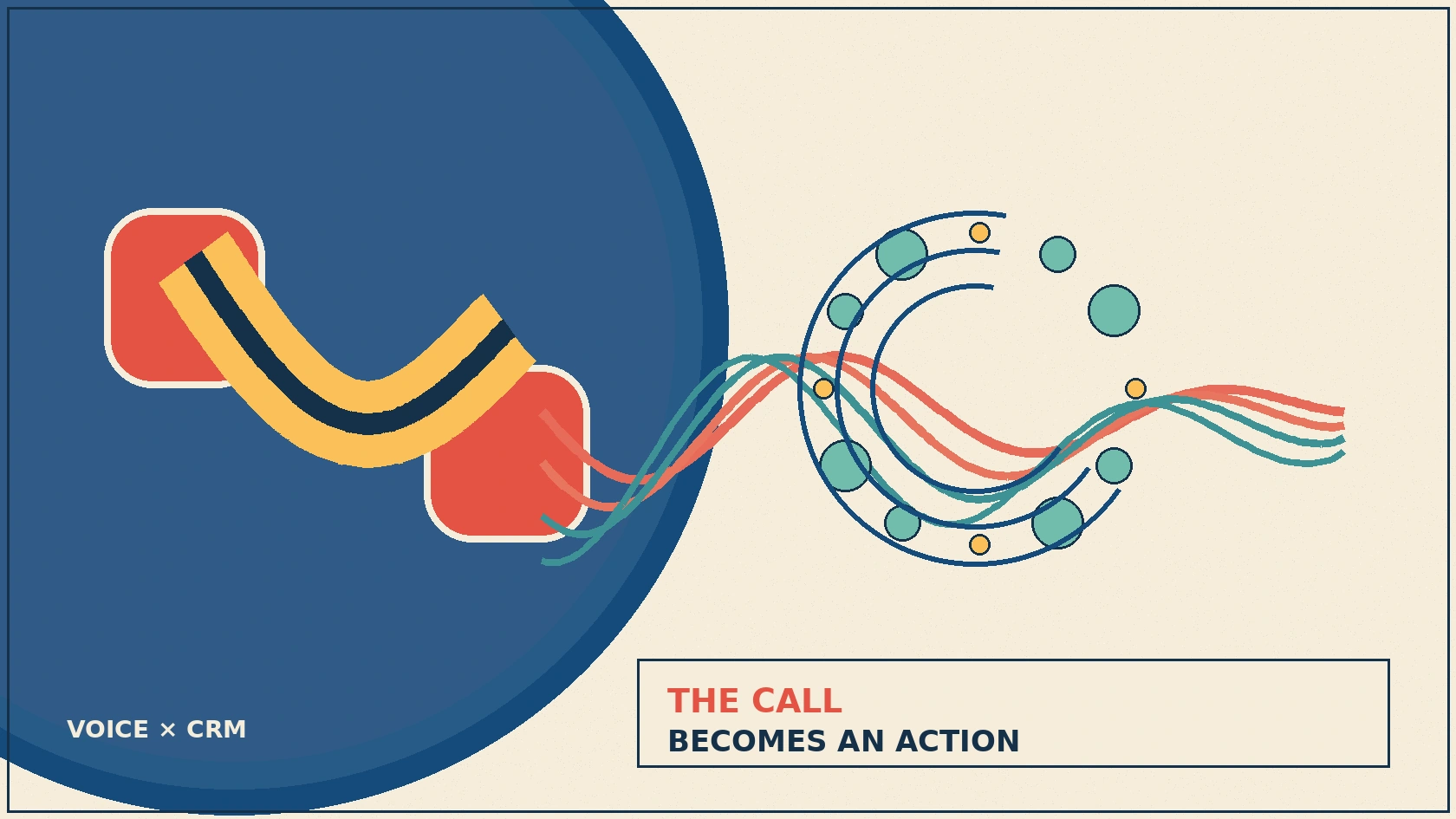
Salesforce has signed an agreement to acquire Cresta, a company building voice AI agents and live coaching software for customer-service calls. Announced on 2 November 2026, the deal is not yet complete. The practical reason is less glamorous than replacing every human on the phone: Salesforce wants conversations to connect directly to customer histories and the systems where businesses resolve issues, process requests and measure outcomes.
The Salesforce acquisition announcement confirms a definitive agreement, with closing expected in the first quarter of Salesforce's fiscal 2028, subject to customary approvals. It did not disclose the transaction price.
Why voice is harder than a chatbot
A call often involves interruptions, unclear questions, identity checks, previous complaints, refunds and a customer who wants an actual resolution. Speech recognition and fluent dialogue are necessary but insufficient. A system has to identify the correct account, understand company policy, safely use permitted tools and know when to transfer to a person. Cresta offers a platform covering voice agents, real-time guidance for human representatives and conversation analysis.
Salesforce already holds customer records, transaction context and service workflows for many businesses. Combining a voice agent's understanding of what a caller is saying with that context could enable a support system to move from summarizing a conversation to taking authorized steps. That potential integration, rather than the text or speech generation alone, is the strategic premise of the deal.
What Salesforce is actually buying
Cresta's published offering includes virtual agents that handle selected calls, live guidance that assists human representatives and analytics to evaluate interaction quality. Salesforce says Cresta serves large brands including Marriott, Comcast and Alaska Airlines. Those are company-described relationships; they do not reveal what fraction of calls run autonomously, or the performance of every deployment.
An independent MarTech summary notes that the acquisition is meant to bridge real-time call intelligence with CRM records and workflows, and that Cresta is expected to retain support for its customers' existing contact-center and telephony systems.
Continued support for third-party contact-center technology matters because large enterprises seldom replace phone routing, recording, compliance systems and CRM at once. The value of a combined platform could come from connecting existing systems without requiring a full infrastructure swap. Whether those integrations remain equally deep, affordable and independent after close is not established by the announcement.
What remains uncertain
The deal awaits completion and regulatory or other customary conditions. Salesforce has not publicly specified an official price, despite estimates circulating in outside coverage. Future roadmap claims should therefore be framed as intentions, not features available to all Service Cloud customers today. The acquisition alone cannot prove the new system will reduce handling time, increase revenue or improve customer satisfaction.
Law firm Cooley confirmed its advisory role and separately described the expected fiscal-year closing period and required approvals.
The operational metrics are what will decide the value
Enterprises evaluating voice AI should measure first-contact resolution, repeat-call rate, transfer-to-human frequency, average handling time, customer satisfaction, compliance errors, cost per resolved case and how often agents need manual correction. A call can sound natural while failing to resolve the customer's problem. An expensive integration that lowers call duration but increases repeat contact may make the service worse.
Security and permissions also matter. Voice agents should not infer approval to refund money, change contracts or expose private records merely because the caller requests it fluently. Authentication, permitted actions, audit trails and a reliable human escalation path are central to contact-center deployment, not administrative extras.
Industry publication CMSWire’s analysis situates the proposed transaction within Salesforce's broader 2026 acquisition activity, while cautioning that several rumored deal values have not been confirmed by Salesforce.
A strategic shift toward the outcome of a call
The commercial opportunity is to connect conversational context to business action without forcing customers through a disconnected maze of tools. For Salesforce, the acquisition could deepen the part of its CRM stack that deals with live, high-stakes service. For buyers, it raises a simple question: will this integration actually solve more problems on the first call, with fewer mistakes and at a defensible cost? Until that can be measured across real deployments, the deal is a statement of direction rather than proof of transformation.
Publication history
— First published.
No published corrections or earlier versions.
How this was made
UpThat uses AI-assisted research and writing. Source checking and publication follow our editorial review workflow. See the original documents above to assess the reporting.
How we use AI ↗