MoMA, Pompidou and M+ build an alliance around long-term art loans
The three museums plan deeper collection sharing and curatorial work. For audiences, the promise lies in sustained access beyond a short touring show.
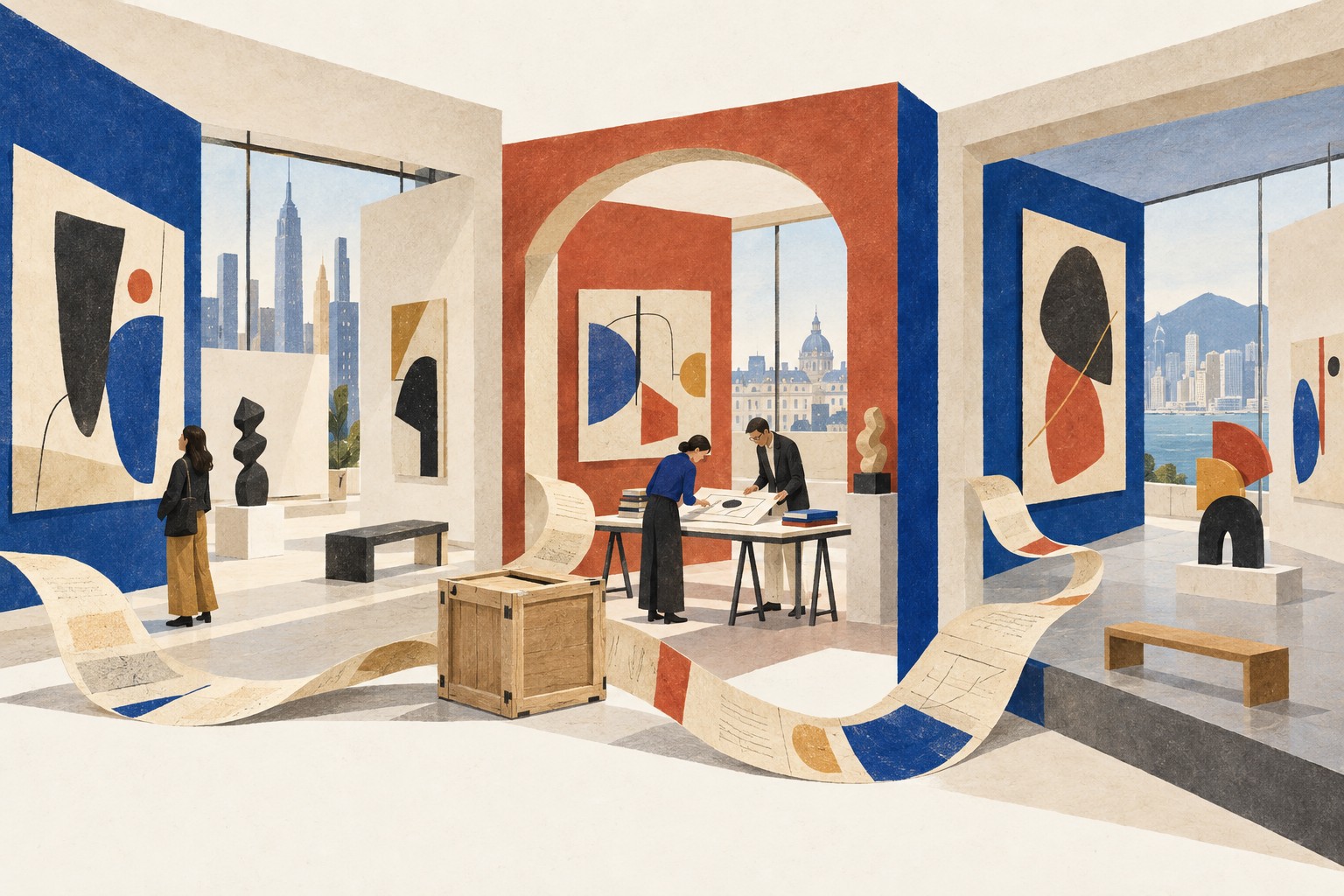 Editorial visualization
MoMA, Centre Pompidou and M+ are preparing to share their collections more deeply. The New York, Paris and Hong Kong museums signed a cultural-alliance framework agreement on October 30.
Their announcement combines joint exhibitions, research and conservation with continued institutional independence. Centre Pompidou president Laurent Le Bon singled out long-term loans as a way to deepen presentations of artists and movements.
That is the part visitors may eventually notice: a borrowed work can become part of a gallery’s continuing account of art, alongside objects already held there. The value is not simply another destination for a familiar masterpiece, but the different relationships curators can build around it.
South China Morning Post reported that MoMA plans a dedicated gallery presenting the M+ collection in New York in 2027. M+ is expected to integrate works from MoMA and Centre Pompidou into exhibitions over the following 18 months. These are reported programming plans, not exhibitions already open to visitors.
A new triangle, with an existing foundation
The October agreement follows a bilateral M+–Centre Pompidou partnership announced on May 15. That earlier arrangement already covered research, exhibition sharing, co-commissions and collection exchange. It set out exhibitions at M+ beginning in 2027, including a Focus Gallery presentation, with further research-based programming planned for 2028.
The May announcement also described moving-image commissions intended for the M+ Facade and the rooftop Belvedere of Centre Pompidou Francilien in Massy, France, from 2027 onward. Those commitments predate the three-way alliance; they should not be mistaken for entirely new projects announced in October.
The latest agreement connects all three collecting institutions within a common framework. It does not announce a merger; their statement preserves separate identities.
For audiences, collection sharing will depend on choices still to come: which works travel, how they are interpreted and how long they remain available. The announcement establishes an institutional commitment; the eventual displays will show how far it broadens the art people can encounter.
Conservation and research are part of that public promise, even when they happen away from the galleries. Sharing expertise can change the questions an exhibition asks as well as the objects it contains. The most revealing outcome would be a presentation that helps visitors see connections their home museum’s collection could not show on its own.
Publication history
— First published.
No published corrections or earlier versions.
How this was made
UpThat uses AI-assisted research and writing. Source checking and publication follow our editorial review workflow. See the original documents above to assess the reporting.
How we use AI ↗