Marvell’s Lumentum deal is a bet on the links between AI chips
The proposed all-stock acquisition joins electrical and optical networking expertise. Approval and integration still lie ahead.
 Editorial visualization
Marvell agreed on November 2 to acquire optical-components maker Lumentum in an all-stock transaction with an implied enterprise value of $115 billion, including debt. Reuters and the Financial Times independently reported the agreement, which places the connections between AI processors at the center of a major corporate bet.
The companies’ announcement specifies 4.5 Marvell shares for each Lumentum share. That fixes the exchange ratio, not a cash payment per share: the value represented by those shares can move with Marvell’s stock price. The headline enterprise value should therefore not be read as cash changing hands.
The companies expect closing in the first half of 2028, subject to approval from both sets of shareholders, regulatory approvals and other conditions. Marvell has signed an agreement to buy Lumentum; it has not completed the acquisition.
The Financial Times places the deal against growing investor doubts about whether heavy AI infrastructure spending will deliver adequate returns. That tension matters here: the transaction commits to a long-term networking strategy while the durability of the wider investment cycle remains contested.
A relationship already tested in hardware
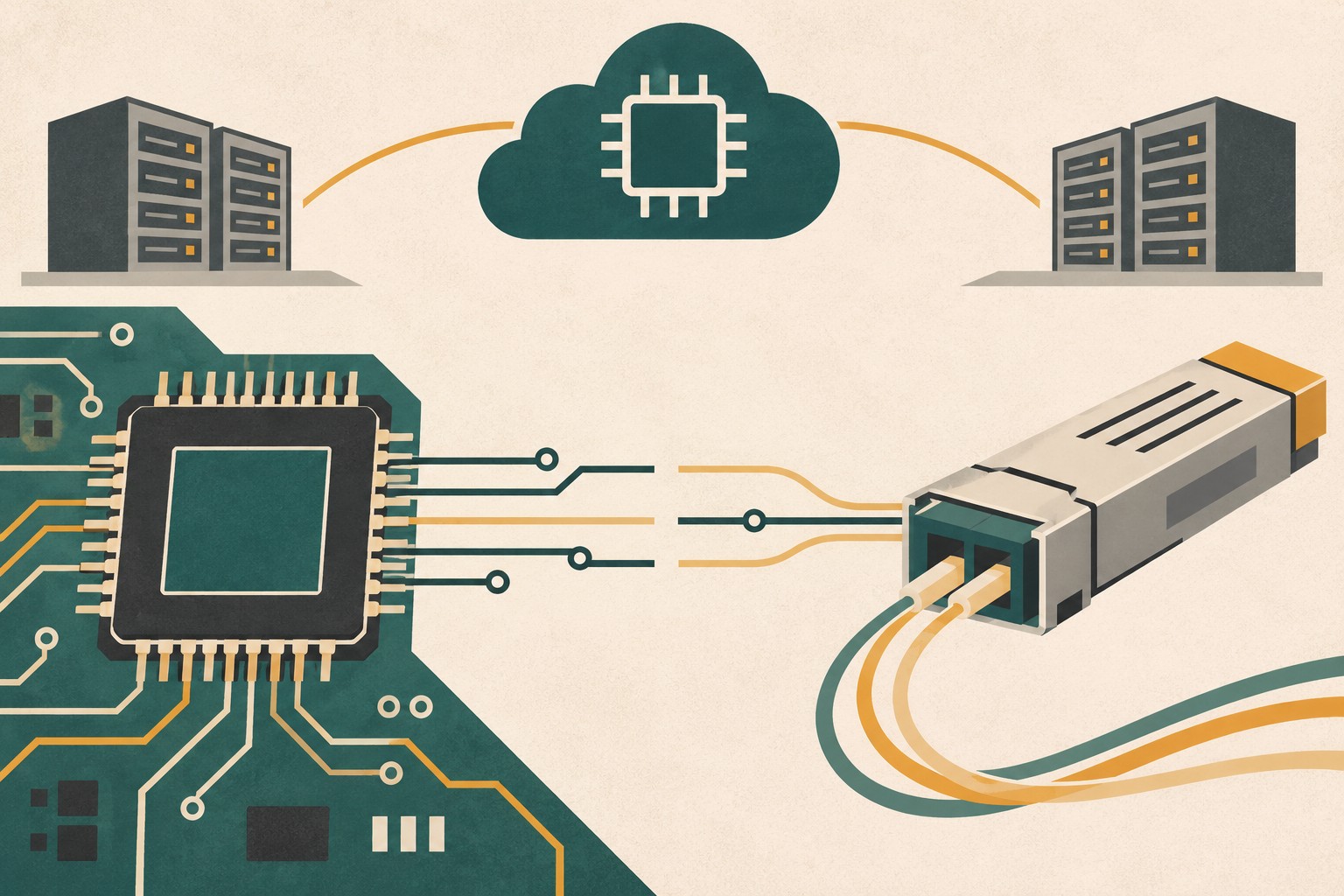
The industrial rationale is to bring Marvell’s interconnect, switching and custom-chip capabilities closer to Lumentum’s lasers, optical transceivers and optical circuit switching. The companies say tighter co-design could improve how electrical and optical technologies work together.
They already have a concrete example of collaboration. In an April 20 account of an OFC 2026 demonstration, Marvell described combining Lumentum’s R300 optical circuit-switching system with modules powered by Marvell optical digital signal processors. The demonstration covered connections within data centers, across campuses and over longer distances.
Marvell also said its RELIANT software monitored data transmission, power consumption and bit-error rates during that demonstration. Those measurements point to the engineering questions behind the deal: equipment must interoperate, and carrying data reliably is a different task from simply adding more processors.
The demonstration establishes a history of joint work, not proof of what a combined company would achieve. A merger could change how products are designed and supplied together, but the announced integration benefits remain expectations.
For a reader following AI infrastructure, the acquisition is a reminder that the hardware race includes the paths between chips. Computation has to be connected across systems, and the proposed combination reaches into the components that make those links possible.
The useful comparison after any eventual closing will be between the existing partnership and the products the combined business can deliver. The two companies could already demonstrate interoperable equipment while separate. The case for ownership rests on whether working under one roof produces something materially better.
Publication history
— First published.
No published corrections or earlier versions.
How this was made
UpThat uses AI-assisted research and writing. Source checking and publication follow our editorial review workflow. See the original documents above to assess the reporting.
How we use AI ↗