South Korea launches Hangang ahead of December research service
The new national supercomputer adds GPU-based AI research to its simulation role. Its 24-fold theoretical computing increase is not a measured speedup for every workload.
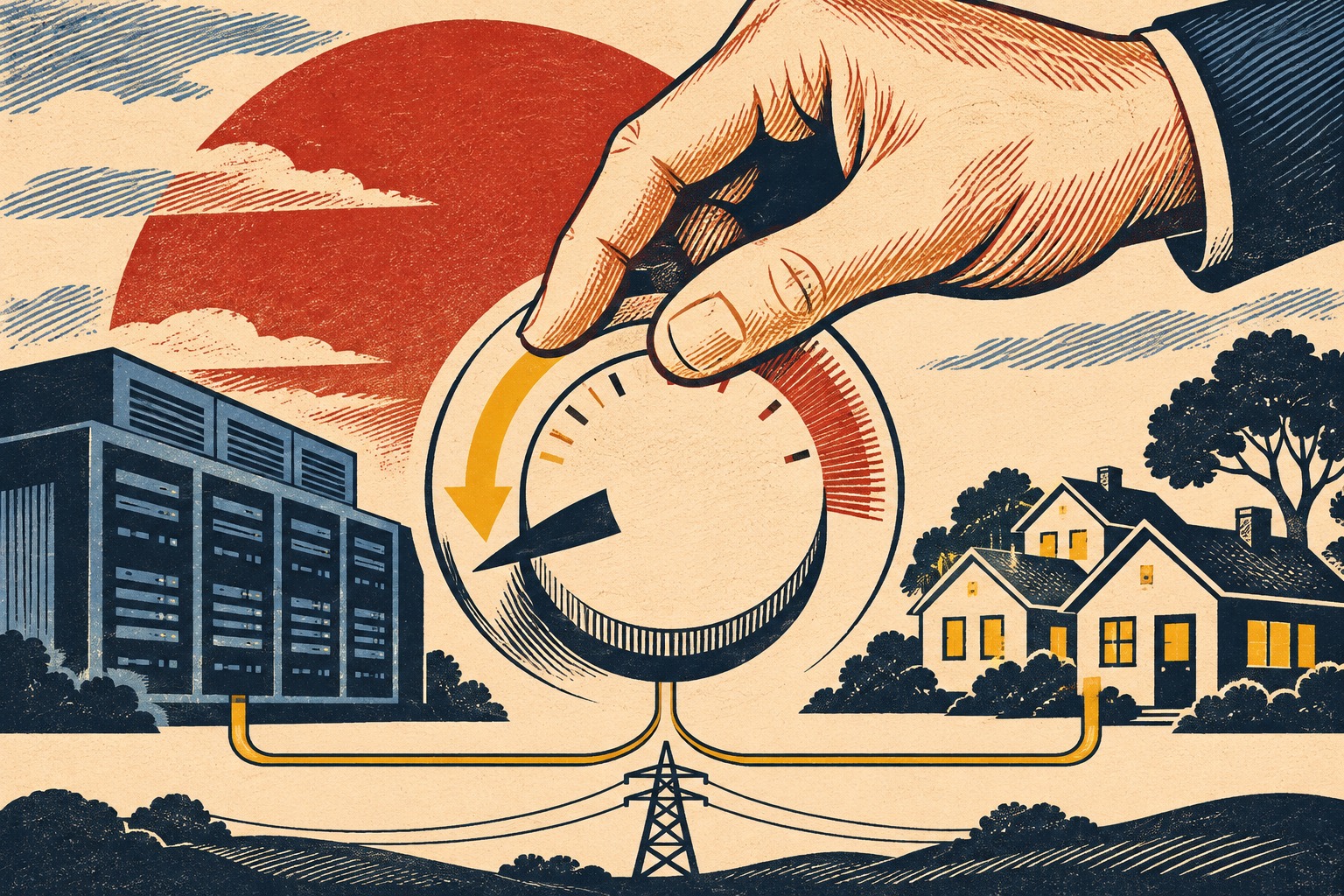
 Editorial visualization
South Korea held a launch ceremony for Hangang, its sixth national supercomputer, on November 2 at the Korea Institute of Science and Technology Information (KISTI) in Daejeon. Researchers are already using a pilot service, but formal service is planned for December 14, according to the science ministry’s announcement.
Hangang follows Nurion, introduced in 2018. The ministry reports 8,496 GPUs, including NVIDIA GH200 accelerators, and 24 times Nurion’s theoretical computing performance. It also reports ten times the storage space and four times the network performance. Those are infrastructure comparisons; they do not establish that a scientific calculation will finish 24 times sooner.
A system for simulation and AI
The architectural change broadens the kinds of research the national system can support. In its May 14, 2025 contract announcement, HPE described a Cray EX4000 system with two partitions: one using NVIDIA GH200 Grace Hopper Superchips and another using fifth-generation AMD EPYC processors. HPE identified AI training, inference and simulation as intended workloads.
The same HPE announcement described a 400-gigabit-per-second Slingshot interconnect for moving data between computing and storage units and allowing applications to scale across the machine. It also specified a fully fanless, direct liquid-cooled architecture.
The ministry says Hangang retains support for large CPU-based calculations and simulations while adding GPU-based AI research. Its intended users include universities, government-funded research institutes and companies, with national strategic R&D among its priorities. Researcher recruitment began in September, ahead of the pilot.
What the headline performance can tell researchers
A theoretical peak is calculated from the hardware’s maximum arithmetic capability, rather than obtained from a benchmark run, as TOP500’s methodology explains. Actual performance depends on the application, algorithm, problem size, implementation, compiler and machine architecture. For a research team, the relevant comparison is therefore the time and resources needed to complete its own workload.
Even the highly parallel LINPACK benchmark used by TOP500 measures a particular task: solving a system of linear equations under conditions chosen for strong performance. TOP500 cautions against treating such results as total system performance. Evaluating Hangang for a particular simulation or AI model will require measuring the time and resources needed for that job, alongside the accuracy the research requires.
Publication history
— First published.
No published corrections or earlier versions.
How this was made
UpThat uses AI-assisted research and writing. Source checking and publication follow our editorial review workflow. See the original documents above to assess the reporting.
How we use AI ↗