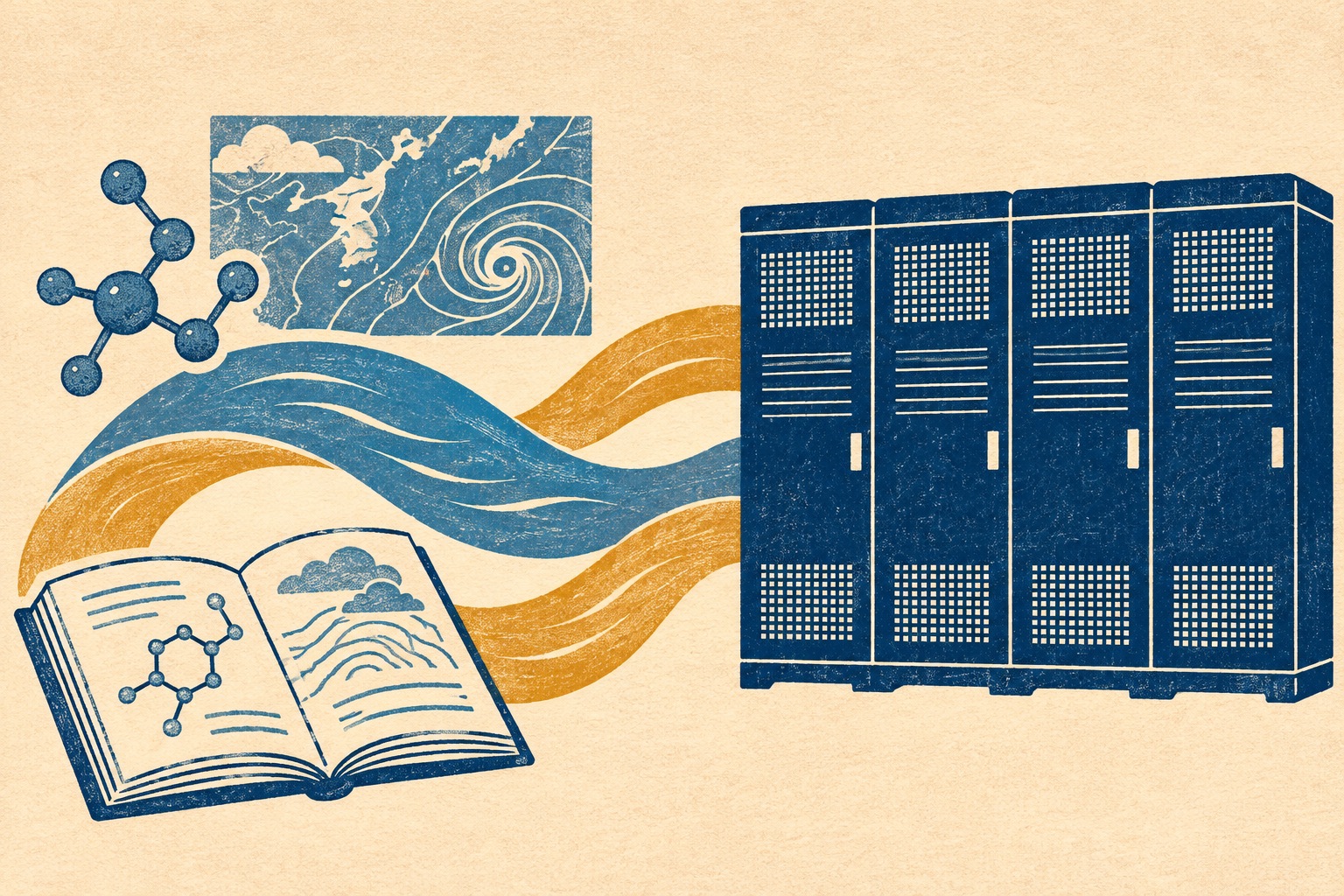
Envision says its 800 V DC system is powering live AI workloads
The Ulanqab announcement combines higher-voltage distribution with battery buffering. The two address different engineering problems.
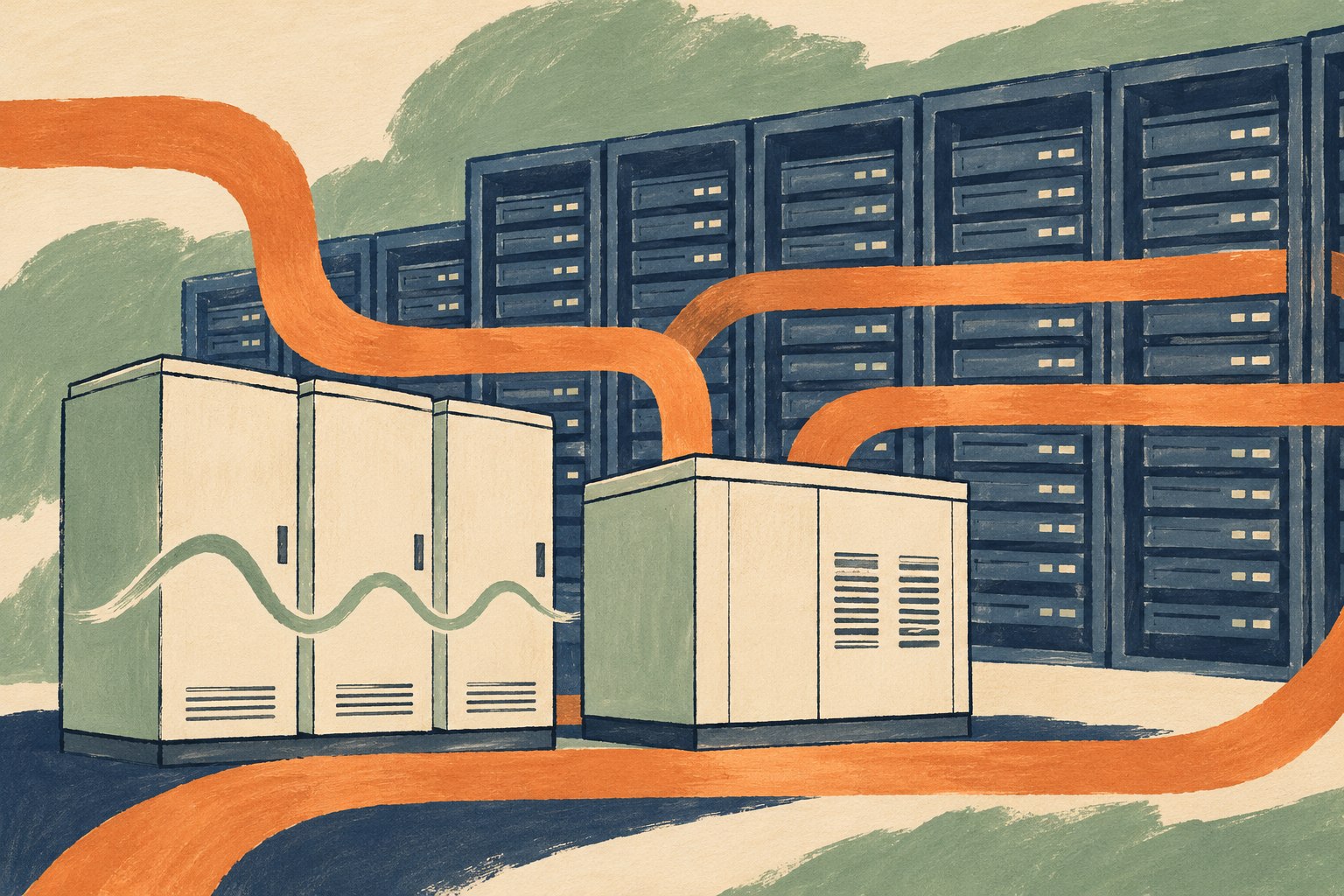 Editorial visualization
Envision says an integrated 800-volt direct-current power system is now supplying live computing workloads at its Galaxy AI campus in Ulanqab, China. The November 2 announcement moves the company’s account of the technology from a proposed architecture to an operating installation.
According to Envision, solid-state transformers convert a 10-kilovolt medium-voltage supply to an 800 V DC bus. Batteries provide support over seconds and backup over minutes, while its controller coordinates storage and conversion on millisecond timescales to handle GPU load fluctuations. These are the manufacturer’s descriptions of operation, rather than independently audited performance results.
Two problems behind one power system
Higher voltage addresses the difficulty of delivering more power to tightly packed computing equipment. The Open Compute Project explains that higher-voltage DC can carry power with a lower current and less conductor material than lower-voltage alternatives. For a data-center designer, that makes the cables and distribution equipment part of the computing-density question.
Rapidly changing demand is a separate problem. In an October 2025 technical explanation, NVIDIA described how synchronized AI training alternates periods of intensive computation with data exchange. When many processors move through those stages together, the facility’s power demand can change sharply.
NVIDIA’s proposed response combines 800 V DC distribution with storage acting as an active buffer, rather than serving only as emergency backup. Its account distinguishes fast storage close to racks from batteries handling slower, larger changes at facility level. Raising the distribution voltage and smoothing the load therefore do different jobs; a voltage label alone does not establish stable operation.
The wider effort is also about compatibility. Google, Microsoft and NVIDIA are working through the Open Compute Project on common requirements for conversion, power quality and interfaces. OCP describes both adjacent power racks for existing AC facilities and direct conversion from medium-voltage AC for future DC distribution. That work provides industry context; it does not certify Envision’s installation or establish that every 800 V system is interchangeable.
Envision’s campus figures require similar care. The company says Galaxy began operations in August, but its 3 GW capacity and support for up to one million accelerators describe planned full build-out. They should not be read as the computing load currently being served by the newly announced power system.
The company calls the deployment a world first. That priority claim has not been independently established here, and the announcement does not provide a measured, end-to-end comparison of operating losses or costs against a matched conventional installation.
The useful next evidence will be field results under changing workloads: how much energy conversion consumes, how the system responds to load swings, and how reliably it operates over time. Those measurements would let operators judge the integration, beyond the headline voltage.
Publication history
— First published.
No published corrections or earlier versions.
How this was made
UpThat uses AI-assisted research and writing. Source checking and publication follow our editorial review workflow. See the original documents above to assess the reporting.
How we use AI ↗