New ice reports warn that cooling the planet will not erase every loss
Two assessments released on November 2 explain why limiting the height and duration of warming overshoot still matters for glaciers, coasts and water supplies.
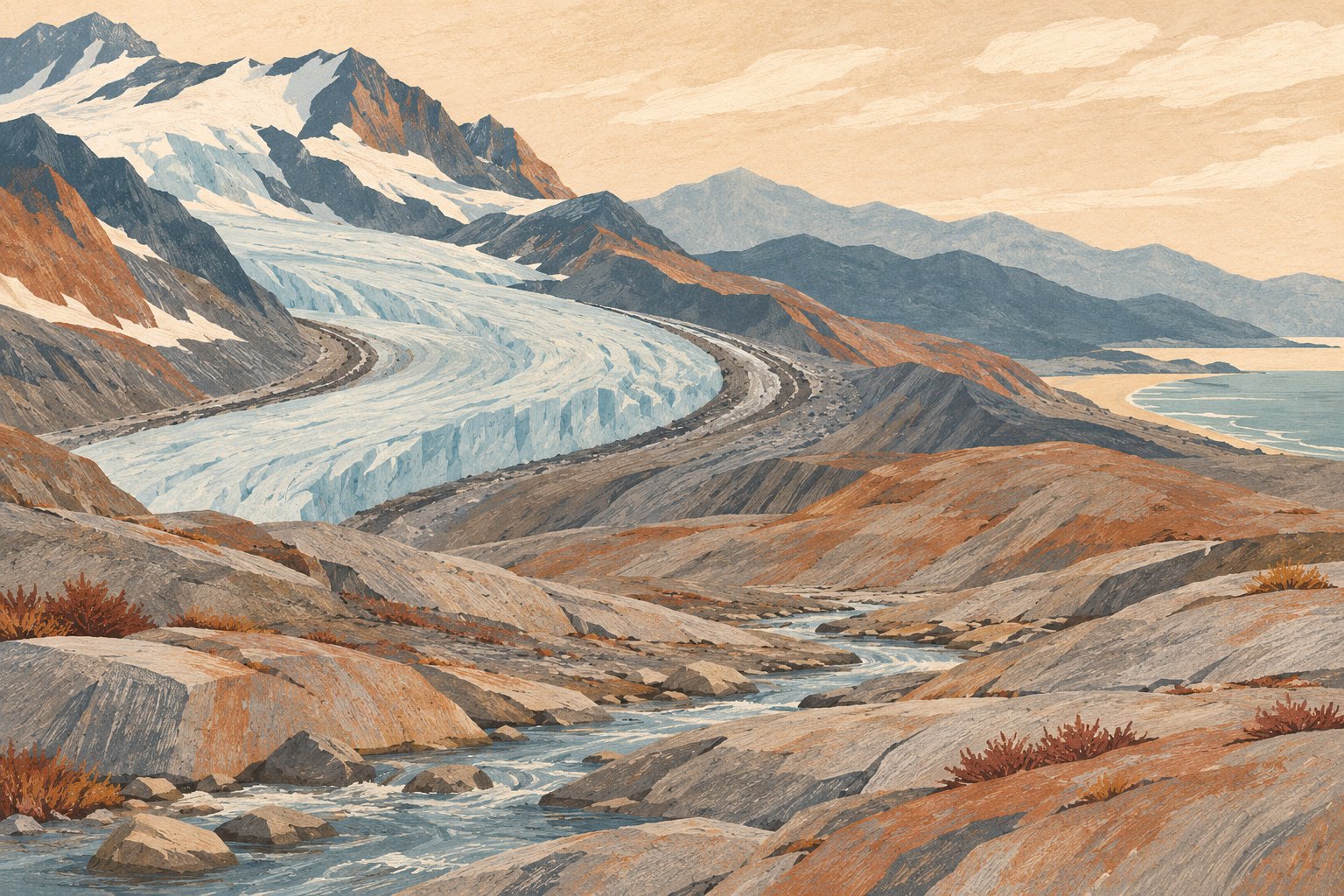 Editorial visualization
Bringing global warming back down after it passes 1.5°C would not automatically restore the ice or coastlines lost along the way. Two assessments released on November 2 put that distinction at the centre of their warning about climate overshoot.
Overshoot and the Cryosphere: Averting Global Meltdown was produced by the International Cryosphere Climate Initiative in coordination with the UN Environment Programme. Released alongside it, State of the Cryosphere 2026: The Cost of Overshoot reviews recent science and observations. Their official joint summary stresses both lasting damage and opportunities to limit it.
Overshoot refers here to exceeding the long-term global warming level above pre-industrial temperatures, rather than a single unusually hot year. UNEP’s September Limiting Overshoot assessment describes the goal as keeping the peak as low, and the period above 1.5°C as short, as possible before bringing warming down.
Losses already measured
The new assessments arrive after another damaging year for Swiss glaciers. ETH Zurich reported on October 1 that Switzerland had lost more than five percent of its glacier volume in 2026 and nearly 20 percent over five years, citing GLAMOS monitoring. A snow-poor winter followed by hot, dry conditions left glaciers exposed to intense melting.
That is an observation from Switzerland, not a measurement of all the world’s ice. The new reports address a wider set of systems, including polar ice sheets, mountain glaciers, snow and permafrost.
Their joint summary says lowering temperatures could slow sea-level rise and potentially halt or partly reverse some glacier, snowpack and sea-ice losses. Recovery, where possible, can take decades to centuries. Long-term retreat of polar ice sheets leaves sea-level consequences extending over centuries.
The limits of a return
Carbon removal is part of a possible temperature decline, but UNEP’s earlier assessment warns that it has constraints and trade-offs. It treats removal as an addition to sustained emissions reductions, with feasibility becoming harder as peak warming rises.
The November reports call for rapid emissions cuts, alongside adaptation to unavoidable losses. Returning the temperature to an earlier level would leave communities facing changed conditions. UNEP’s assessment therefore argues that adaptation must continue through the warming, peak and cooling phases, including where irreversible limits have already been reached.
Publication history
— First published.
No published corrections or earlier versions.
How this was made
UpThat uses AI-assisted research and writing. Source checking and publication follow our editorial review workflow. See the original documents above to assess the reporting.
How we use AI ↗