CrowdStrike's AI Kill Switch Can Cut Off Agents. The Full Shutdown Is Still Coming.
Falcon Guardian can block an agent’s access to its AI model today. Coordinated endpoint termination and cross-environment containment are broader capabilities CrowdStrike says are still on the roadmap.
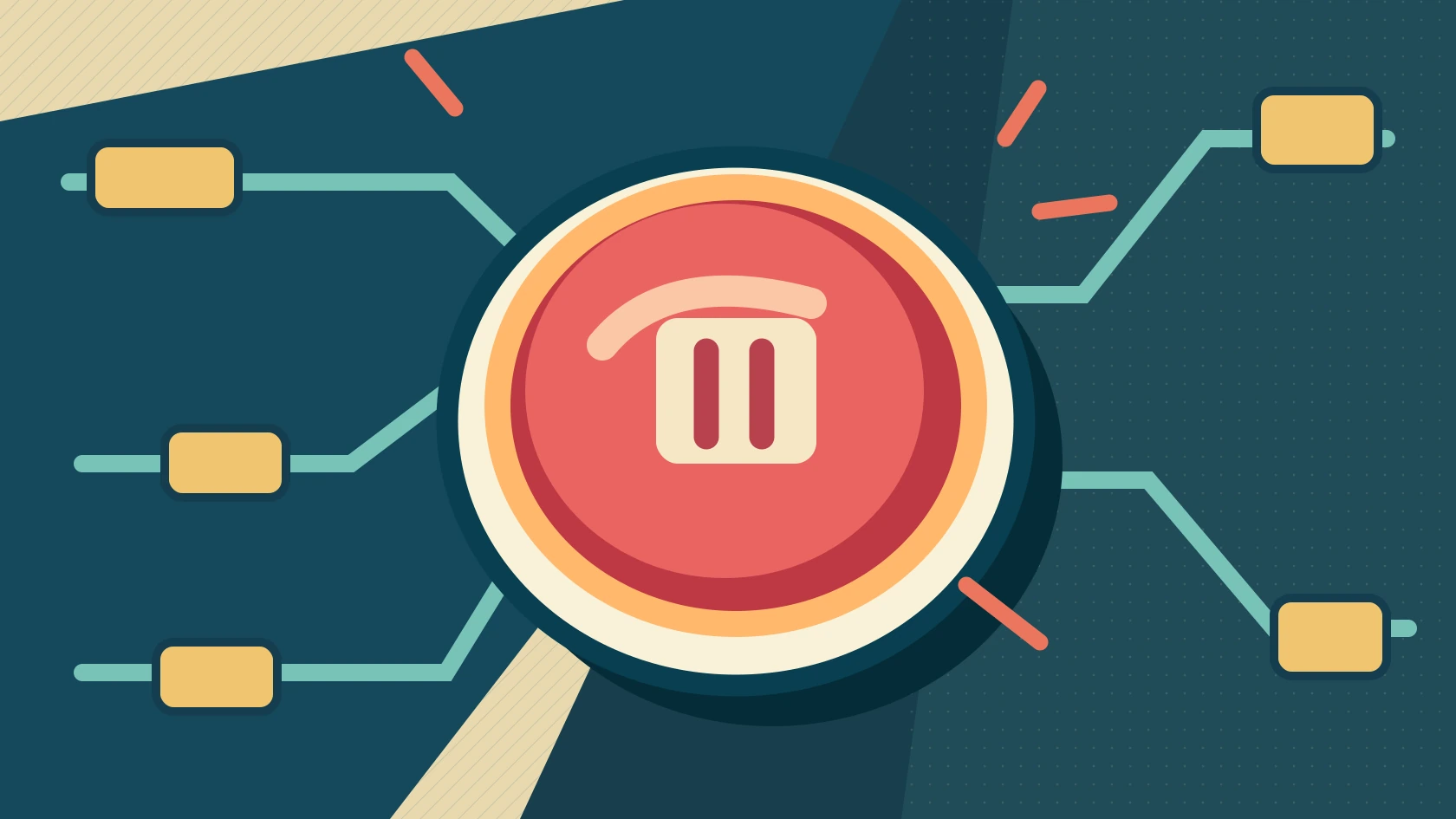 Editorial visualization
An autonomous AI agent may be able to edit code, browse internal records and trigger business tools long after its original user stops watching. CrowdStrike has announced an emergency intervention for that problem: AI Kill Switch, introduced on November 3, 2026 in its Falcon Guardian security product. There is a critical distinction in the announcement. The initial release can stop an agent's access to the models it relies on, while broader endpoint-level termination is still described as coming soon.
In its technical launch explanation, CrowdStrike says the available switch directs connected AI gateways to block model access; it does not claim that every agent process on every host can already be killed remotely.
The first switch cuts a connection, not necessarily a process
Today's control operates where agents reach language models. A security administrator can activate the response in Falcon Guardian, which instructs a connected gateway to deny further model access. That gateway may be CrowdStrike's own Falcon AI Gateway, now generally available with Guardian, or a compatible third-party gateway. The approach can interrupt planning and decision-making by an agent that depends on those calls.
But blocking a model call is not identical to terminating all software already running. An agent could still have local processes, queued tasks or access to separate tools and identities. Agents using local models without crossing a gateway are another boundary case. CrowdStrike explicitly describes coordinated enforcement across endpoints, cloud, SaaS, browsers and identities as a broader future phase. Readers should distinguish the existing control from the full architectural ambition.
Why the control is more than a red button
The company is placing the switch inside a security product that discovers AI usage, observes prompts and agent behavior and applies policies. In an enterprise, the difficult question is not whether a process can technically be stopped; it is who has authority to stop it, how a dangerous behavior is recognized, and how an intervention is audited. A switch that is easy for any employee to trigger could itself become an availability problem.
CrowdStrike says authorized administrators make the decision, with an audit trail. The design aligns with ordinary incident response: identify the potentially compromised workload, contain its ability to do harm, preserve evidence and investigate before restarting. The company also announced agent-level hooks for some popular assistants and additional visibility into network and model traffic. These are product claims, not independently published efficacy measurements.
The broader product announcement distinguishes capabilities available now from endpoint and other containment features on the roadmap. That distinction is essential when evaluating coverage for locally running agents.
Publication history
— First published.
No published corrections or earlier versions.
How this was made
UpThat uses AI-assisted research and writing. Source checking and publication follow our editorial review workflow. See the original documents above to assess the reporting.
How we use AI ↗